
Solar
How Much Solar Does Your Home Actually Need?
Bigger is not always better. Here is how we size a solar system to your real usage, roof and budget — so every panel pays its way.
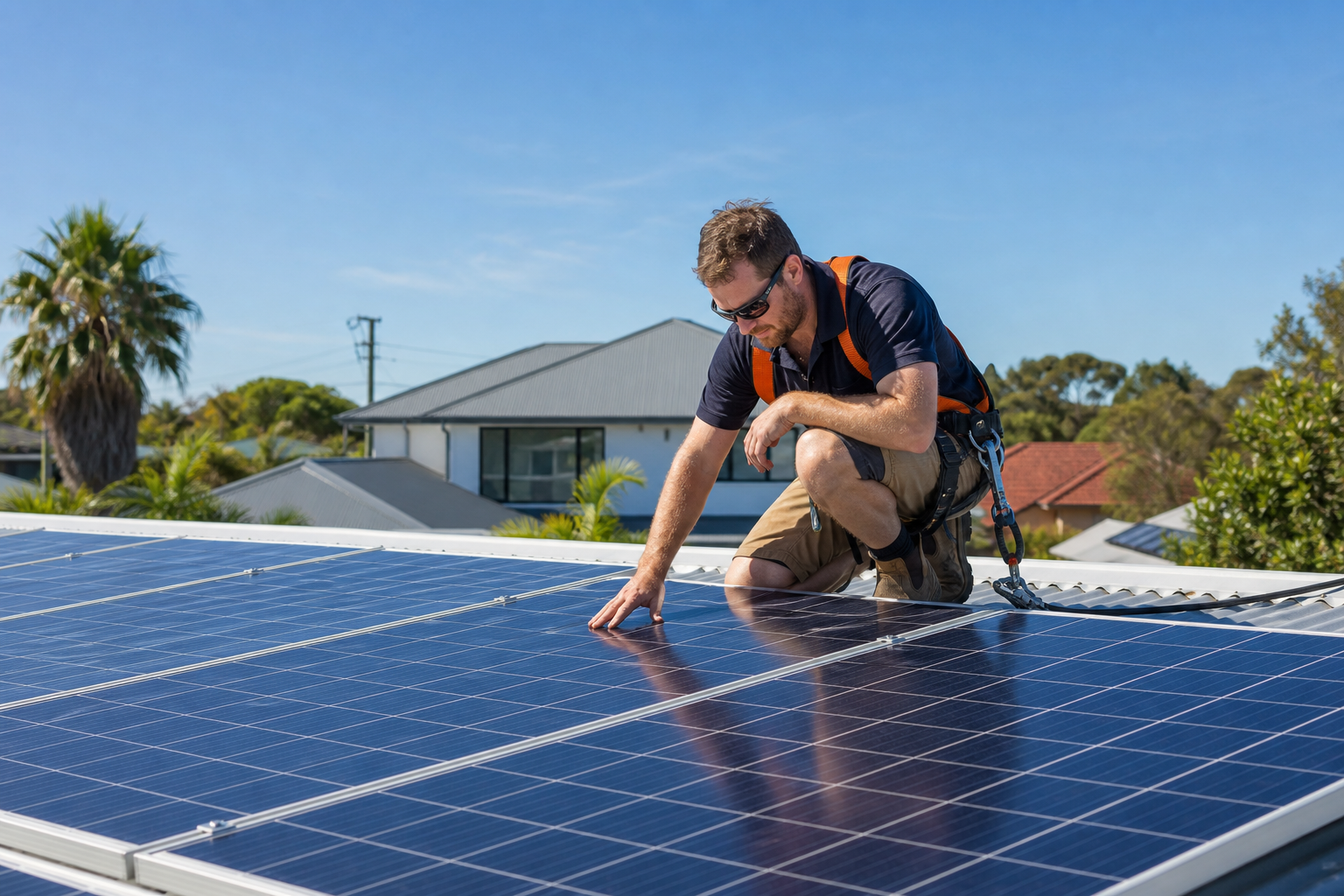
One of the first questions every homeowner asks is simple: how many panels do I need? The honest answer is that it depends — but not on guesswork. A properly sized system comes from three numbers: how much electricity you use, when you use it, and how much usable roof you have.
Start with your usage, not the panel count
Your electricity bill shows your average daily consumption in kilowatt-hours. A typical Victorian household sits somewhere between 15 and 25 kWh per day, but the spread is huge — a two-person unit with gas cooking might use 8 kWh, while a large family running ducted cooling, a pool pump and two EVs can easily pass 40 kWh. That daily figure is the anchor for everything else.
As a rough rule, each kilowatt of well-oriented solar in Victoria produces around 3.6 to 4 kWh per day averaged across the year. So a 6.6 kW system yields roughly 24 to 26 kWh a day on average — more in January, less in June. Matching that curve to your consumption is where good design starts.
When you use power matters as much as how much
Solar only offsets what you consume while the sun is up, unless you add a battery. Households where someone is home during the day — working remotely, retirees, young families — self-consume a much larger share of their generation, which is where the real savings live. If most of your usage happens after 6pm, a slightly smaller array paired with storage often beats a giant array feeding cheap exports to the grid.
Roof real estate and orientation
North-facing roof delivers the best annual yield, but east-west splits are far from wasted — they flatten generation across the morning and afternoon, which usually matches family routines better than a midday spike. Shading from trees, antennas or neighbouring buildings matters more than most people expect; a good installer models this before quoting rather than discovering it on install day.
Why we rarely recommend the biggest system
Oversizing has a cost: more panels, more racking, sometimes a bigger inverter and network approval hurdles. If the extra generation mostly becomes low-value feed-in exports, the payback period stretches instead of shrinking. Our approach at Grid2Solar is to size for your next five years — including a planned EV or heat pump — and no further.
The takeaway: don't buy a number of panels, buy a system designed around your bill. A free assessment takes minutes and removes all the guessing.