
Solar
Heat Pump Hot Water, Explained Without the Jargon
A heat pump moves warmth instead of making it — which is why it heats your water for roughly a quarter of the energy of a traditional electric tank.
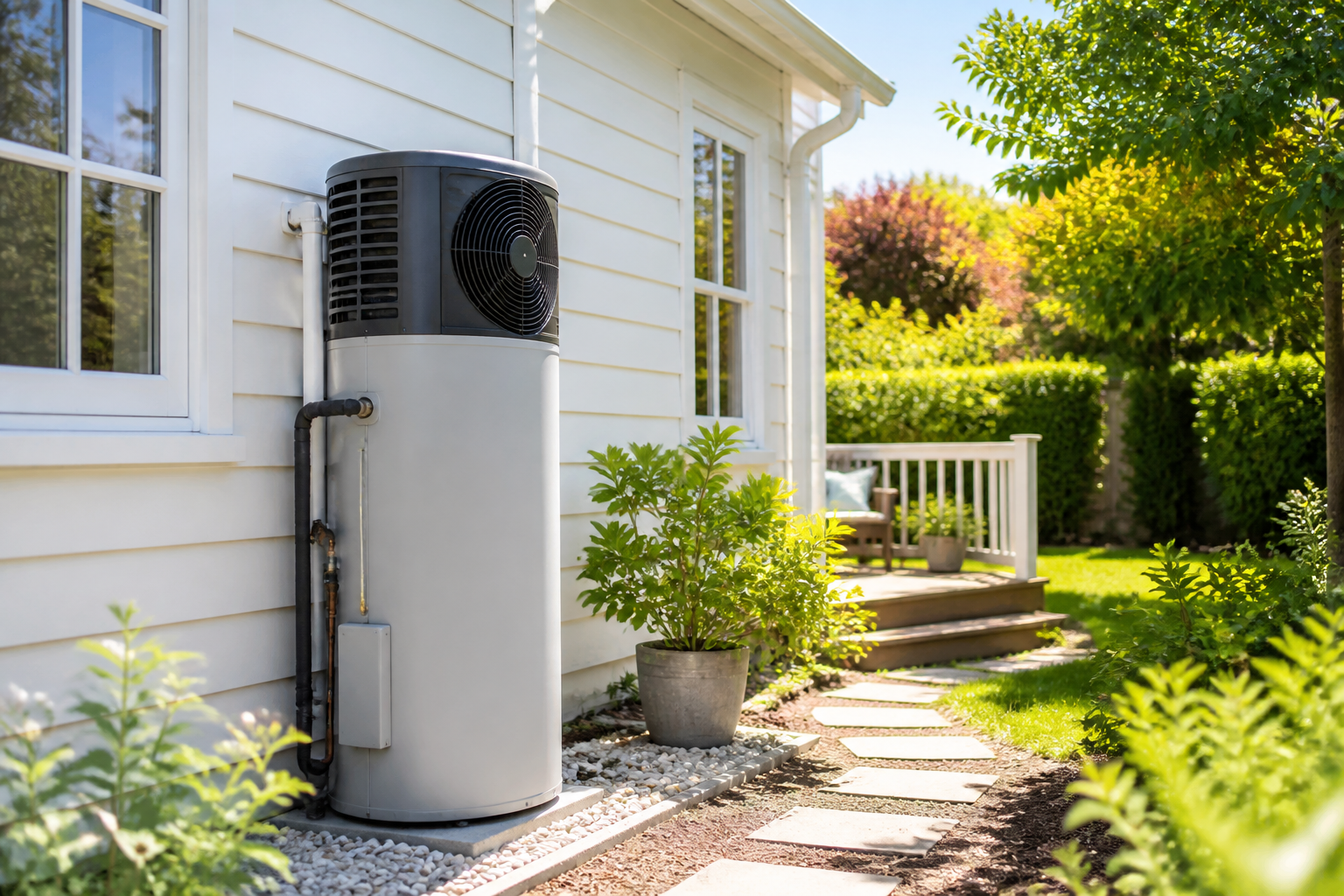
Hot water is quietly one of the biggest lines on a household energy bill — often a fifth to a quarter of total usage. Heat pump hot water systems attack that cost directly, and they do it with a trick that sounds too good to be true until you understand it: they don't create heat, they move it.
The refrigerator running backwards
A heat pump works like a fridge in reverse. A fan draws in ambient air, a refrigerant absorbs the warmth in that air, a small compressor concentrates it, and a heat exchanger transfers it into the water tank. Because the electricity only powers the moving parts — fan and compressor — rather than a resistive element, a good unit delivers three to four units of heat for every unit of electricity consumed. Engineers call that a coefficient of performance of 3 to 4; on your bill it just reads as hot water for roughly a quarter of the previous cost.
Does it work in cold weather?
The most common question in Victoria, and a fair one. Modern units extract useful heat from air well below 5°C, and quality systems include a small backup element for the rare frosty morning that outpaces the compressor. In practice, a properly sized 270 or 320 litre unit keeps a family in hot showers year-round in Melbourne's climate without drama. Placement helps — a spot with decent airflow, ideally catching some sun, lets the unit work less.
The solar multiplier
Here is where it gets genuinely clever: heat pumps have run timers. Schedule the heating cycle for the middle of the day and your rooftop solar powers it, which means your hot water is effectively heated by sunshine at near-zero marginal cost. A tank of hot water is, in a real sense, a battery you already own — it stores midday energy for evening showers.
Rebates make the sums easy
Because hot water heat pumps displace so much energy, they attract some of the most generous incentives in the efficiency landscape — small-scale technology certificates plus state programs, subject to eligibility and approved product lists. The net upgrade cost after incentives frequently pays itself back within a few years, and the units carry long warranties.
If your current electric tank is over ten years old, don't wait for it to fail on a winter morning. Replacing it on your schedule, with rebates applied and the timer set to soak up your solar, is one of the cleanest wins in home energy.